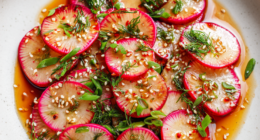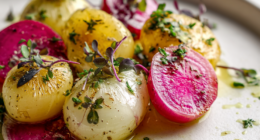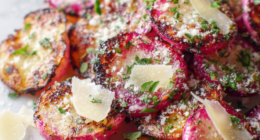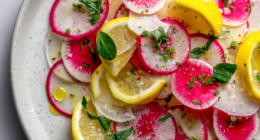

Radishes often get a bad rap as a raw snack, but when you sauté them with butter, they reveal a whole new side. The heat tames their sharp bite, turning them tender and subtly sweet, with just a hint of caramelization. It’s a simple trick that transforms these humble roots into a rich, comforting side.
I love how the butter coats each radish slice, making every bite glossy and luscious. It’s one of those recipes that feels fancy but is dead simple to pull off on a busy weeknight. Plus, it’s a sneaky way to get more flavor out of something that’s usually just a crunchy, peppery addition to salads.
Focusing on transforming humble radishes into a rich, buttery side that elevates their sharp crunch, highlighting how simple ingredients can surprise with their depth and versatility.
The story behind this recipe
- Years ago, I was rummaging through my grandmother’s old cookbook, and a scribbled note caught my eye—’Radishes are shy, give them butter and heat, they’ll bloom.’ That moment stuck with me, and I started experimenting. Sautéing radishes was a happy accident, turning their usual sharpness into a gentle, sweet glow that made me wonder why I’d overlooked them raw all these years.
- This dish came together because I needed a side that was quick, honest, and a little unexpected. Radishes, often dismissed as just a crunchy snack, shine when kissed with butter and heat. It’s a reminder that even the simplest vegetables can surprise you—if you’re willing to give them a little love and patience.
- heading
Key ingredients and tips
- Radishes: I love how their sharp crunch softens and sweetens with heat—look for firm, bright roots. If they’re a bit limp, skip or use them in a salad instead.
- Butter: I use unsalted, real butter for richness—its nutty aroma really comes alive during sautéing. You can swap with ghee for a slightly more toasted flavor, but the butter’s creaminess is key.
- Salt: I prefer flaky sea salt for its crunch and burst of flavor—be generous at the end. If you only have table salt, cut back slightly to avoid over-salting.
- Pepper: Freshly cracked black pepper adds a subtle heat that balances the sweetness—don’t skip it. For a twist, try a little white pepper for a milder, more floral note.
- Optional herbs: A sprinkle of chopped chives or dill can brighten the dish—add just before serving for that fresh, herby hit. Dried herbs won’t give the same punch, so fresh is best.
- Oil (if needed): I sometimes add a splash of neutral oil if my pan is too dry—just enough to keep the butter from burning at the start. Olive oil works, but can add a fruitier note.
- Vinegar or lemon: A quick splash at the end can heighten the flavors—go for lemon juice or a mild vinegar. Skip if you want pure buttery radishes, but a tiny tang can be delightful.
Spotlight on key ingredients
Radishes:
- I love how their sharp crunch softens and sweetens with heat—look for firm, bright roots. If they’re a bit limp, skip or use them in a salad instead.
- Butter: I use unsalted, real butter for richness—its nutty aroma really comes alive during sautéing. You can swap with ghee for a slightly more toasted flavor, but the butter’s creaminess is key.
Butter:
- I use unsalted, real butter for richness—its nutty aroma really comes alive during sautéing. You can swap with ghee for a slightly more toasted flavor, but the butter’s creaminess is key.
- Salt: I prefer flaky sea salt for its crunch and burst of flavor—be generous at the end. If you only have table salt, cut back slightly to avoid over-salting.
Notes for ingredient swaps
- Dairy-Free: Swap butter for coconut oil or vegan butter. Expect a slightly different richness but still a lovely shine and subtle sweetness.
- Vegan: Use olive oil or avocado oil instead of butter. The flavor will be lighter and less creamy, but still deliciously savory.
- Salt: If you’re avoiding salt, try a splash of soy sauce or miso paste. Adds umami and depth, but use sparingly.
- Pepper: Substitute with white pepper for a milder, more floral heat that blends seamlessly without changing the flavor profile too much.
- Herbs: Fresh thyme or parsley can replace chives or dill. They add brightness but might change the overall fresh note slightly.
- Vinegar: Lemon juice can be swapped for a splash of apple cider vinegar or sherry vinegar—each adds a different tang but keeps the dish lively.
Equipment & Tools
- Skillet: To sauté the radishes evenly and develop flavor.
- Sharp knife: To slice radishes uniformly for even cooking.
- Wooden spoon or spatula: To stir and turn the radishes gently.
- Measuring spoons: To measure butter and seasonings accurately.
- Lemon or vinegar: To add brightness at the end of cooking.
Step-by-step guide to sautéed radishes
- Gather a 10-inch skillet and a sharp knife. Preheat the pan over medium heat (about 160°C/320°F).
- Wash and dry 1 bunch of radishes. Trim the stems, but leave a little green if you like a splash of color.
- Slice radishes into 1/4-inch rounds. Aim for even slices so they cook uniformly and soften together.
- Add 2 tablespoons of unsalted butter to the hot skillet. Let it melt completely, bubbling gently, with a nutty aroma filling the air.
- Once butter is bubbling and fragrant, add the radish slices. Spread them out in an even layer. Cook for 3-4 minutes, stirring occasionally.
- Continue sautéing, stirring every minute or so, until radishes are tender and edges start caramelizing—look for a slight golden hue and a soft jiggle (about 8-10 minutes total).
- If the butter begins to brown too quickly or the radishes stick, lower the heat slightly and add a splash of water or oil. Fixes: reduce heat, add liquid, stir well.
- Season with a generous pinch of flaky sea salt and freshly cracked black pepper during the last minute of cooking. Smell should turn toasty and bright.
- Remove from heat. Let the radishes rest for 1 minute in the pan; the residual heat will deepen their sweetness.
- Transfer to a serving dish, drizzle with a squeeze of lemon or a splash of vinegar if desired, and sprinkle with fresh herbs for brightness.
Let the radishes rest in the pan for a minute to deepen their sweetness, then transfer to a plate. Finish with a squeeze of lemon, sprinkle of herbs, and a final crack of pepper for freshness.
How to Know It’s Done
- Radishes are tender with slightly crispy edges and a golden caramelization.
- Butter is nutty and fragrant, coating the slices evenly.
- Appearance: glossy, lightly browned, and vibrant in color.
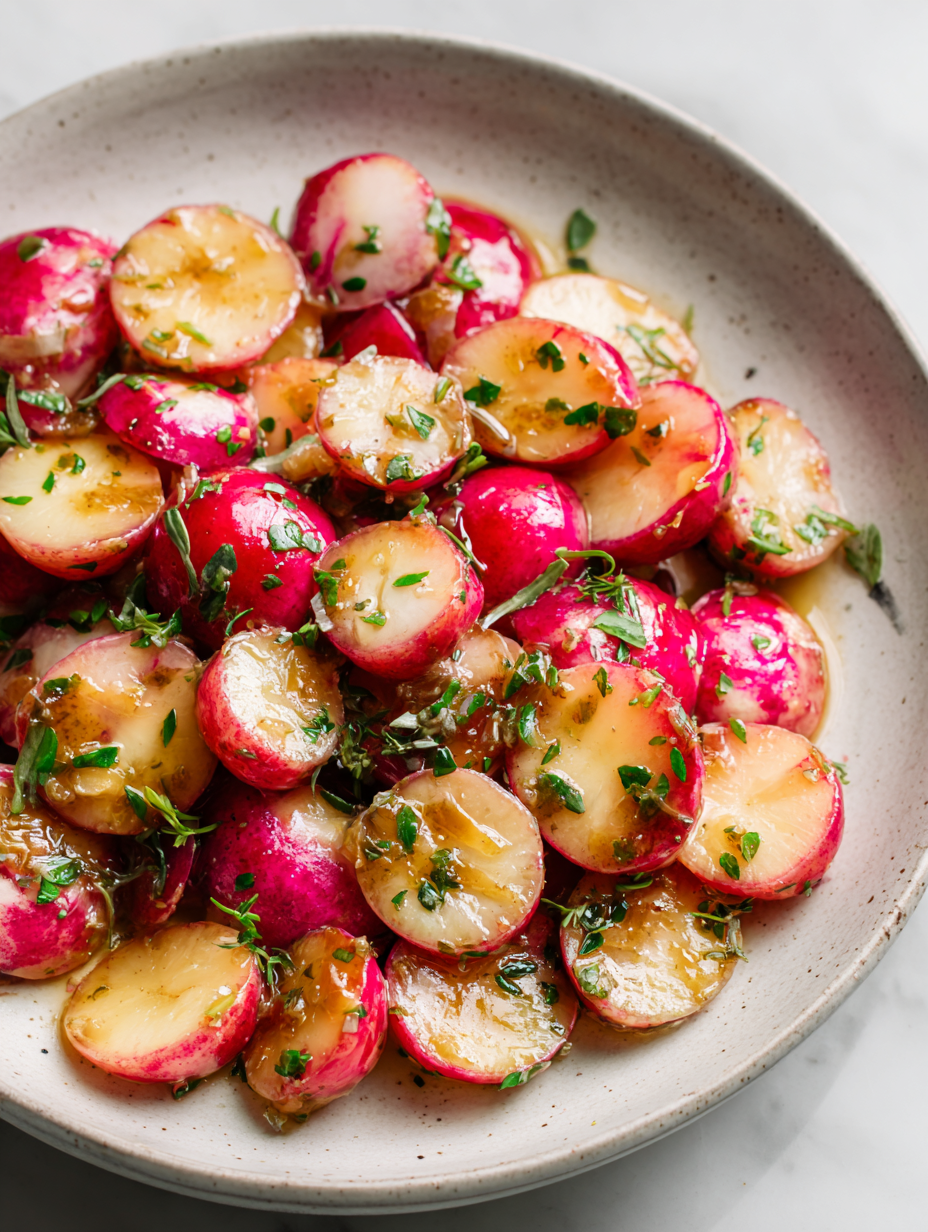
Sautéed Buttered Radishes
Ingredients
Equipment
Method
- Wash and dry the radishes thoroughly, then trim the stems, leaving a bit of green if you like a splash of color.
- Slice the radishes into 1/4-inch rounds, aiming for even slices so they cook uniformly and soften together.
- Preheat a skillet over medium heat until hot, then add the butter, letting it melt and bubble gently with a nutty aroma filling the air.
- Add the sliced radishes to the skillet, spreading them out in a single layer. Cook for about 3-4 minutes, stirring occasionally, until they start to soften and turn slightly translucent.
- Continue sautéing, stirring gently every minute, until the radishes develop golden edges and become tender, about 8-10 minutes total. You’ll notice a fragrant, toasty aroma as they caramelize.
- Once cooked, squeeze fresh lemon juice over the radishes or add a splash of vinegar to brighten their flavor. Season generously with flaky sea salt and freshly cracked black pepper.
- Give everything a gentle stir to evenly coat the radishes with the seasonings and let them rest for a minute in the pan, allowing their sweetness to deepen.
- Transfer the radishes to a serving dish, sprinkle with chopped fresh herbs if using, and serve immediately for a glossy, tender, and flavorful side.
Tips for perfect sautéed radishes
- Bolded mini-head: Use a hot pan → Ensures the butter sizzles immediately, giving a glossy, crisp edge to radishes.
- Bolded mini-head: Slice evenly → Aim for 1/4-inch rounds for uniform cooking and tender, consistent bites.
- Bolded mini-head: Add butter early → Melts quickly and coats radishes, creating a rich, shiny surface with a nutty aroma.
- Bolded mini-head: Stir gently → Prevents breaking slices and promotes even caramelization, avoiding mushiness.
- Bolded mini-head: Watch for golden edges → Signals perfect tenderness and caramelization, about 8-10 minutes total.
- Bolded mini-head: Season at the end → Enhances flavor without overpowering, just before removing from heat for maximum impact.
- Bolded mini-head: Rest briefly → Resting in the pan for a minute deepens sweetness and melds flavors before serving.
Common mistakes and how to fix them
- FORGOT to adjust heat → Radishes burn or stay raw; lower heat and add liquid if needed.
- DUMPED too much salt → Over-salted radishes; rinse or reduce salt in subsequent batches.
- OVER-TORCHED butter → Burnt butter tastes bitter; lower heat sooner and stir constantly.
- MISSED the resting step → Radishes won’t deepen in flavor; let sit for a minute after cooking.
Quick fixes and pantry swaps
- When radishes release too much moisture, splash a little more butter to prevent steam-shrinkage.
- If radishes turn bitter, patch with a squeeze of lemon to brighten the flavor instantly.
- Splash a pinch of salt if the radishes taste dull after cooking; enhances their natural sharpness.
- When butter starts to brown too quickly, shield with a teaspoon of water to cool and preserve flavor.
- DUMPED too much salt? Rinse radishes briefly under cold water, then pat dry before re-seasoning.
Prep, store, and reheat tips
- Prep the radishes by washing, trimming, and slicing into rounds ahead of time. Store in an airtight container in the fridge for up to 24 hours; they’ll stay crisp and fresh.
- You can sauté the radishes and keep them in the fridge for up to 2 days. Reheat gently in a skillet over low heat, adding a small pat of butter to revive the gloss and warmth.
- Sautéed radishes taste best fresh, but if you must store, expect a slight loss of crunch and a more concentrated sweetness after refrigeration.
- For reheating, warm over low heat until just heated through. They will soften slightly, and the butter will re-melt, restoring some of their original lusciousness. Keep an eye on them to prevent overcooking and mushiness.
Frequently Asked Questions
1. What do sautéed radishes taste like?
Sautéed radishes have a tender, slightly crispy texture with a buttery, sweet, and mildly peppery flavor, especially when caramelized.
2. How do I choose good radishes for this recipe?
Use firm, fresh radishes with bright skin. If they’re limp or dull, they won’t cook well or look appealing.
3. Can I make this dish vegan or dairy-free?
Yes, you can substitute ghee or vegan butter for a dairy-free option, but the flavor will be slightly different.
4. How long should I sauté radishes?
Cook the radishes over medium heat until they’re tender and edges are golden, about 8-10 minutes, stirring occasionally.
5. Should I add anything at the end of cooking?
Adding a splash of lemon juice or vinegar at the end brightens the dish, balancing the richness of butter with tang.
6. Can I prepare radishes ahead of time?
Radishes can be stored in the fridge for up to 24 hours before cooking. Reheat gently if needed, but they’re best fresh.
7. What if the butter burns during sautéing?
If the butter starts to burn, lower the heat immediately and add a splash of water or oil to cool the pan.
8. How do I know when radishes are done?
Overcooking turns radishes mushy and dulls their flavor. Keep an eye on them and remove from heat once tender and golden.
9. When should I add pepper?
Adding freshly cracked black pepper just before removing from heat enhances flavor without overpowering the dish.
10. What can I do if my radishes taste bitter?
If radishes taste bitter, a quick squeeze of lemon or a pinch of sugar can balance the flavor beautifully.
Sautéed radishes with butter might seem like a small thing, but they remind me how humble ingredients can become something special with a little heat and patience. Each tender, glossy slice feels like a quiet victory—simple, honest, and unexpectedly satisfying. It’s one of those dishes that makes me pause, appreciate the everyday, and maybe even smile at how much flavor can come from such modest roots.
In times when I need a quick vegetable fix that feels indulgent but isn’t heavy, this dish always delivers. It’s a small reminder that sometimes, the best flavors come from giving something straightforward a little extra love. No matter the season, these radishes will always surprise me—crisp, buttery, and just a little bit charming.

Hi, I’m Anjali Arora, the quietly curious mind behind Landscape Insight. I’ve always been most comfortable in my own space. I’m not great at small talk (it still makes me a little uneasy), and I’ve never been the loudest person in the room. What I have always carried with me, though, are two steady loves that shape how I move through the world: animals and food.