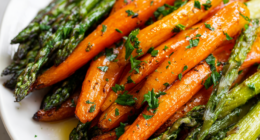
This roasted asparagus with balsamic glaze is a reminder that simple ingredients can surprise you. The unexpected sweetness that the glaze adds transforms earthy, slightly bitter asparagus into something more complex, almost like a little celebration of flavor in every bite.
I first stumbled on this combo during a busy week when I wanted something quick but not boring. Roasting brings out the nutty, caramelized notes in the asparagus, while the balsamic drizzle adds a tangy, sweet contrast that feels indulgent but is still straightforward to pull together.
It’s one of those dishes that feels fancy enough for guests but honest enough for a weeknight dinner. All you really need are a few good ingredients and a moment to let the oven do its magic. The result is a balance of textures and flavors that keeps me coming back, especially when I want something that feels both vibrant and comforting.
Focusing on the unexpected sweetness that balsamic glaze adds to the earthy, slightly bitter asparagus, transforming it into a dish that balances simplicity with a surprising depth of flavor.
The story behind this recipe
- I remember the first time I roasted asparagus and drizzled it with balsamic glaze—there was a moment of surprise at how something so simple could feel so special. It became a go-to in my kitchen, especially on busy nights when I want flavor without fuss.
- That sweet tangy glaze somehow makes even the most humble bunch of asparagus feel like a treat, almost like a little celebration in the oven. I love how the roasting deepens the earthiness while caramelizing the glaze’s sugars, turning the dish into a balance of bitter, sweet, and smoky all at once.
- Now, I can’t imagine preparing asparagus without that glossy balsamic drizzle—every time I do, I think about the joy of turning everyday ingredients into something memorable, even if just for myself.
Key ingredients and tips
- Asparagus: I love how fresh, bright green spears snap when you bend them—look for firm, evenly sized stalks for even roasting. Skip the woody ends, and save them for soup or stock; no waste here.
- Balsamic glaze: I prefer a thick, syrupy glaze with a deep, sweet-tangy punch—think concentrated cherry cola in aroma. If yours is thin, reduce it gently until it’s glossy and coats the back of a spoon, then pour generously.
- Olive oil: I use a good extra virgin for roasting—its fruity aroma and rich mouthfeel really boost the flavor. A neutral oil will do if you’re avoiding bold tastes, but skip the light-tasting oils like canola if you want warmth and depth.
- Salt: I reach for flaky sea salt—its crunch and burst of salinity contrast beautifully with the sweet glaze. If you only have table salt, reduce the amount a bit to avoid overpowering the delicate asparagus.
- Black pepper: Freshly cracked black pepper adds a subtle heat and complexity. Grind it just before roasting for maximum aroma; pre-ground can taste flat and dull after baking.
- Optional: Parmesan: I love a sprinkle of flaky Parmesan after roasting—its salty, nutty bite adds a layer of richness. If dairy isn’t your thing, a handful of toasted pine nuts works beautifully for crunch.
- Lemon zest (if using): I sometimes add a touch of lemon zest for brightness. It’s a small step but lifts the dish’s fresh, tangy notes—use a microplane to avoid bitter pith.
Spotlight on key ingredients
Asparagus:
- I love how fresh, bright green spears snap when you bend them—look for firm, evenly sized stalks for even roasting. Skip the woody ends, and save them for soup or stock; no waste here.
- Balsamic glaze: I prefer a thick, syrupy glaze with a deep, sweet-tangy punch—think concentrated cherry cola in aroma. If yours is thin, reduce it gently until it’s glossy and coats the back of a spoon, then pour generously.
Balsamic glaze:
- I love its rich, sweet aroma that intensifies when heated—almost like ripe cherries. During roasting, it turns sticky and glossy, clinging beautifully to the spears, adding a complex tang that balances bitterness.
- ingredient
Notes for ingredient swaps
- Dairy-Free: Skip Parmesan or cheese toppings—your asparagus will still shine with the sweet glaze and smoky notes.
- Vinegar Alternatives: Use a splash of red wine vinegar or apple cider vinegar instead of balsamic—it’ll add tang but less sweetness.
- Oil Choices: Avocado oil can replace olive oil for a milder flavor and higher smoke point, keeping the roasting crisp.
- Sweetener Swap: Maple syrup or honey can substitute balsamic glaze for a different sweet, floral note—consider the moisture content.
- Herb Boost: Fresh thyme or rosemary can be sprinkled before roasting for aromatic complexity, especially in place of lemon zest.
- Salt Types: Flaked sea salt enhances texture and flavor; kosher salt is a good substitute if you prefer a milder saltiness.
- Pepper Variations: White pepper offers a subtler heat and is less visible on the bright green asparagus, good for a cleaner look.
Equipment & Tools
- Baking sheet: To roast the asparagus evenly.
- Parchment paper or silicone mat: To prevent sticking and make cleanup easier.
- Microplane or zester: To add lemon zest or grated cheese as a finishing touch.
- Small saucepan or microwave-safe cup: To warm the balsamic glaze if needed.
Step-by-step guide to roasted asparagus
- Preheat your oven to 220°C (430°F). Line a baking sheet with parchment or a silicone mat for easy cleanup.
- Trim the woody ends off the asparagus—about 1-2 inches. Arrange spears in a single layer on the prepared sheet.
- Drizzle with 2 tablespoons of good quality olive oil. Toss gently to coat evenly but avoid breaking the stalks. Spread back into an even layer.
- Sprinkle with flaky sea salt and freshly cracked black pepper. Use your fingers to distribute evenly for consistent seasoning.
- Roast in the oven for 12-15 minutes. Check at the 10-minute mark; the asparagus should be tender and slightly caramelized around the tips. It may darken a little but should not burn.
- While roasting, warm your balsamic glaze slightly if it’s thick—just a quick 10-second microwave burst until pourable. Keep an eye on it to avoid boiling over.
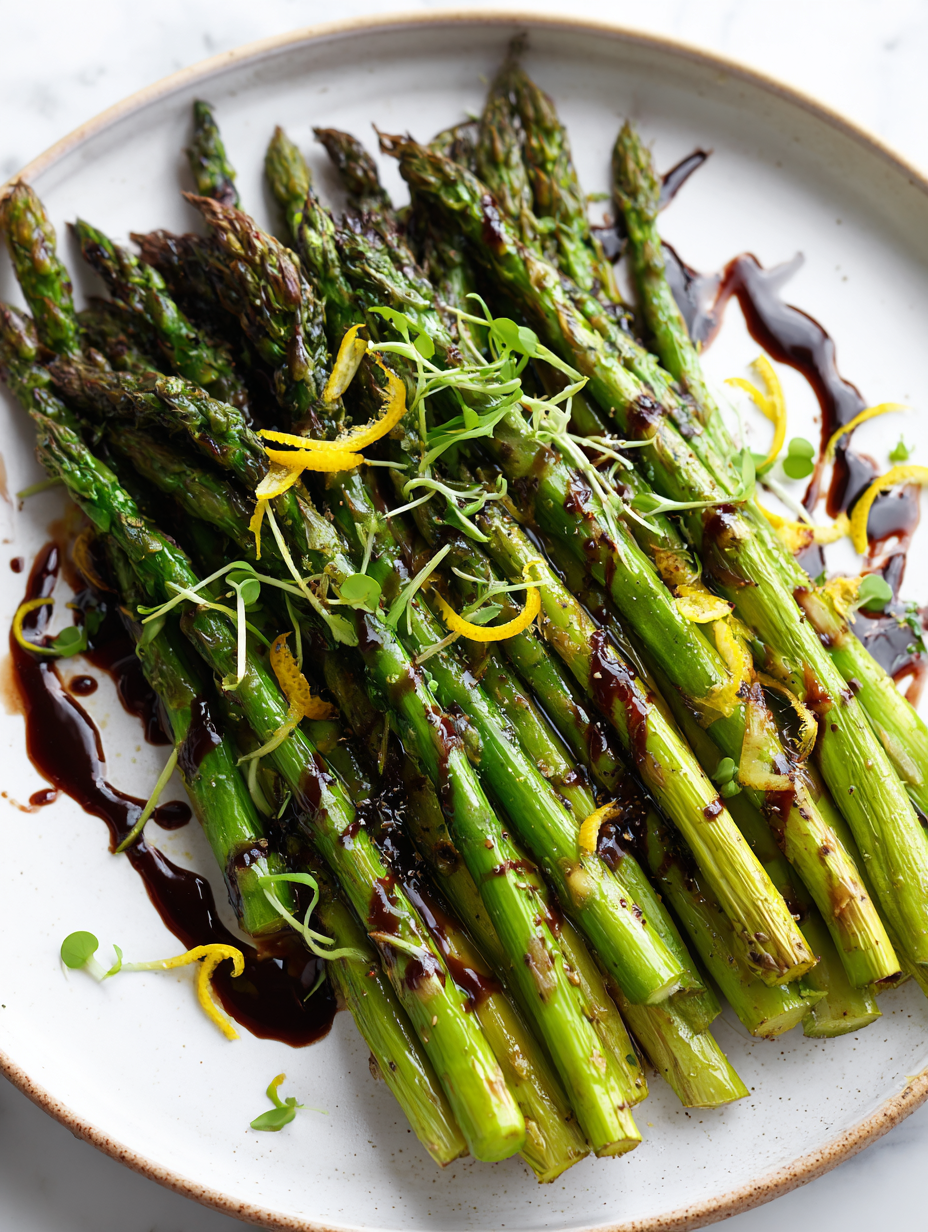
- Once the asparagus is done, transfer to a serving platter. Drizzle generously with the warmed balsamic glaze. Let it sit for a minute to soak in the flavors.
- Optionally, finish with a sprinkle of lemon zest or grated Parmesan for extra brightness or richness. Serve immediately.
Let the roasted asparagus sit for a minute to absorb the balsamic glaze. Plate it gently, adding extra drizzle or toppings if desired. Serve warm, with a sprinkle of finishing ingredients to enhance flavor and presentation.
How to Know It’s Done
- Asparagus tips should be golden and slightly crispy edges.
- The stalks should be tender when pierced with a fork, but still hold their shape.
- The balsamic glaze should be glossy, thick, and clingy, not watery.
Roasted Asparagus with Balsamic Glaze
Ingredients
Equipment
Method
- Preheat your oven to 220°C (430°F). Line a baking sheet with parchment paper or a silicone mat for easy cleanup.
- Trim the woody ends off the asparagus, about 1-2 inches from the bottom. Spread the spears in a single layer on the prepared baking sheet.
- Drizzle the asparagus with olive oil and gently toss to coat each spear evenly, ensuring they’re well dressed but not crushed.
- Sprinkle flaky sea salt and freshly cracked black pepper over the asparagus, distributing evenly for balanced seasoning.
- Roast the asparagus in the oven for 12-15 minutes, until the tips turn golden and slightly crispy, and the stalks are tender when pierced with a fork.
- While the asparagus roasts, warm your balsamic glaze slightly in a small saucepan or microwave until it’s pourable and glossy.
- Once the asparagus is done, transfer it to a serving platter. Drizzle generously with the warmed balsamic glaze, allowing it to seep into the tender spears.
- Sprinkle the dish with lemon zest for a fresh burst of flavor and finish with grated Parmesan if desired for added richness.
- Serve immediately while warm, enjoying the balance of caramelized, tender asparagus topped with a glossy, tangy glaze.
Notes
Pro tips for perfect roasted asparagus
- Bolded mini-head: Use high heat for quick roasting—aim for 220°C (430°F) to get those crispy tips.
- Bolded mini-head: Toss asparagus gently in oil—avoid crushing the stalks, keep them intact for even roasting.
- Bolded mini-head: Watch for color change—tips should turn golden and slightly caramelized, not burnt.
- Bolded mini-head: Warm your balsamic glaze—just a few seconds in the microwave makes it pour smoothly and evenly.
- Bolded mini-head: Test tenderness with a fork—stalks should yield easily but still hold their shape for perfect texture.
- Bolded mini-head: Drizzle just after roasting—while still warm, so the glaze seeps in and clings better.
- Bolded mini-head: Finish with a pinch of sea salt—flaky salt adds texture and enhances the sweetness of the glaze.
Common mistakes and how to fix them
- FORGOT to watch asparagus closely, it burns easily—reduce heat if edges darken too fast.
- DUMPED the balsamic glaze directly from the jar—warm it first for a smoother drizzle.
- OVER-TORCHED the asparagus, causing bitterness—remove from oven once tips are golden.
- MISSED the salt sprinkle, the dish feels flat—add flaky sea salt immediately after roasting.
Quick fixes and pantry swaps
- When asparagus tips burn quickly, splash with a little water and lower oven temperature.
- If glaze is too thick, microwave for 5 seconds to loosen and shimmer.
- Dumped too much oil? Patch with a paper towel—avoid greasy bites.
- Over-torched tips? Shield with foil and reduce heat for the next batch.
- When spears are limp, rescue with a quick 2-minute blast at 200°C (390°F) to revive crispness.
Prep, store, and reheat tips
- Trim and prep the asparagus a day ahead; store in an airtight container in the fridge for up to 24 hours. It will stay bright and fresh, but avoid letting it sit too long to prevent wilting.
- You can roast the asparagus and keep it in the fridge for up to 2 days. Reheat gently in a warm oven (about 180°C/350°F) until just warmed through, watching for any signs of drying out or loss of crispness.
- Balsamic glaze can be made or bought ahead; store in a sealed jar at room temperature for up to a month. Reheat briefly in the microwave or warm on the stove to improve pourability, noticing its glossy, syrupy texture.
- For best flavor, add the balsamic glaze just before serving. If refrigerated, it may thicken; warm slightly to restore its shiny, sticky consistency and bright aroma.
- While the roasted asparagus is best fresh, you can prepare it a few hours ahead and gently reheat. The texture may soften slightly but still retain the sweet, caramelized flavor with a fresh zing if warmed properly.
Frequently Asked Questions
1. How do I choose fresh asparagus?
Look for bright green, firm stalks without any slimy or wilted parts. The tips should be tightly closed and slightly tender to the touch. If the ends are woody or dry, trim them off and discard. Fresh asparagus should snap easily when bent, indicating good freshness.
2. How can I thicken or enhance my balsamic glaze?
If your balsamic glaze is thin or watery, gently simmer it in a small pan over low heat until it thickens and becomes glossy. This intensifies the flavor and helps it cling better to the asparagus. If it’s too sweet for your taste, add a splash of vinegar to balance the sweetness.
3. How do I know when the asparagus is done?
Roast the asparagus until the tips turn golden brown and slightly crispy, about 12-15 minutes at 220°C (430°F). The stalks should be tender but not mushy. The glaze should be glossy and sticky, coating the spears evenly. A gentle jiggle of the pan will reveal a caramelized aroma and slight crackle.
4. Can I swap the oil used for roasting?
Yes, you can substitute olive oil with avocado or sunflower oil if you prefer a milder flavor. For a richer taste, butter can be used but be mindful of the lower smoke point. Keep in mind, different oils will slightly alter the aroma and mouthfeel of the dish.
5. What salt should I use?
If you don’t have flaky sea salt, use kosher salt or even coarse regular salt. The larger grains add a nice crunch and help balance the sweetness of the glaze. Avoid fine table salt in large quantities, as it can overpower the delicate flavor.
6. Should I add lemon zest?
Adding a bit of lemon zest before serving brightens the dish and enhances the natural freshness of the asparagus. It also provides a subtle citrus aroma that complements the sweet and tangy balsamic glaze. Use a microplane to get fine, fragrant zest without the bitter pith.
7. What if my asparagus burns?
If your asparagus tips burn or turn bitter quickly, reduce the oven temperature slightly and keep a close eye. Tossing the spears halfway through roasting evenly distributes heat. Also, spreading the stalks in a single layer prevents overcrowding and steaming.
8. What equipment do I need?
Always preheat your oven to ensure even roasting and caramelization. Use a baking sheet lined with parchment for easy cleanup. Toss the asparagus gently in oil and seasoning to avoid breaking the spears. Keep an eye on the color, aiming for golden tips and tender stalks.
9. Can I make this dish ahead?
You can prepare the asparagus up to a day ahead: trim and store in the fridge. Reheat gently in a warm oven or microwave, just until heated through. Keep the glaze separate until serving to maintain its glossy texture, and add right before plating for the best flavor.
10. What if my asparagus gets limp or the glaze thickens?
When the asparagus looks limp or dull, splash with a little water and quickly reheat at 200°C (390°F) for a minute or two. If the glaze thickens too much, warm it briefly to loosen. For a quick fix, a light drizzle of lemon juice can brighten the dish if flavors need an extra lift.
This roasted asparagus with balsamic glaze is a reminder that simple ingredients can surprise you. The unexpected sweetness that the glaze adds transforms earthy, slightly bitter asparagus into something more complex, almost like a little celebration of flavor in every bite.
I first stumbled on this combo during a busy week when I wanted something quick but not boring. Roasting brings out the nutty, caramelized notes in the asparagus, while the balsamic drizzle adds a tangy, sweet contrast that feels indulgent but is still straightforward to pull together.

Hi, I’m Anjali Arora, the quietly curious mind behind Landscape Insight. I’ve always been most comfortable in my own space. I’m not great at small talk (it still makes me a little uneasy), and I’ve never been the loudest person in the room. What I have always carried with me, though, are two steady loves that shape how I move through the world: animals and food.