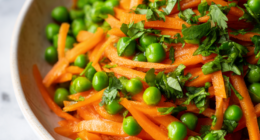
This green pea curry is a tribute to those childhood moments when I’d sneak into the garden, popping fresh peas straight from the pod, feeling that burst of sweetness on my tongue. It’s funny how simple ingredients can hold so much nostalgia, yet turn into something warm and unexpectedly rich. Making this dish feels like capturing a memory and turning it into something comforting for a busy weeknight.
The beauty of this curry is its straightforwardness. No fancy ingredients, just those bright green peas, a handful of spices, and a splash of coconut milk. It’s not about fussing over perfect presentation but about letting the fresh, sweet peas shine through, softened just enough to melt in your mouth. It’s the kind of recipe that reminds you that sometimes, the simplest things are the most satisfying.
This recipe is inspired by childhood memories of sneaking green peas straight from the garden pod, then turning them into a comforting curry that balances simplicity with depth. It’s about capturing that fresh, sweet burst of peas and transforming it into something warming, almost nostalgic, yet unexpected in its richness.
The story behind this recipe
- One summer, I was wandering through my local farmers’ market, and a basket of vibrant green peas caught my eye. I remembered how my grandmother used to make a simple curry with fresh peas, a dish that felt like a warm hug on chilly evenings. That memory sparked the idea to recreate that comforting, yet lively flavor, with a little personal twist. It’s funny how a small, bright pod can carry so much history and heart.
- • I used to sneak peas from the garden as a kid, feeling like I was stealing a secret. That joy still flavors every spoonful of this curry.
- • The first time I made this, I was in a rush, but the peas still turned out sweet and juicy, just like I remembered. It reminds me that simplicity often wins the day.
- • Every batch feels like a small celebration of summer, even if it’s made in the middle of winter with frozen peas.
Ingredient breakdown
- Frozen peas: I love the bright, sweet pop they bring; if using fresh, cook just until tender to keep that lively flavor.
- Coconut milk: I prefer the creamy richness it adds, but a splash of yogurt works for a tangy twist—add at the end to prevent splitting.
- Spices (cumin, coriander, turmeric): Toasting them first releases a nutty aroma that fills the kitchen; skip this step if you’re in a rush.
- Onion and garlic: Sauté until golden and fragrant—this builds the base flavor; don’t rush this step, or you’ll miss that sweet, caramelized smell.
- Green chilies: For a gentle heat, chop finely and cook with the onions; adjust the amount according to your spice tolerance, or skip for milder flavor.
- Oil (mustard or vegetable): I use mustard oil for that sharp, pungent note, but neutral oil works fine if you prefer a milder aroma—just don’t skip the fat, it’s crucial for flavor.
- Lemon juice: Brightens everything with a zing; add just before serving to lift the curry’s sweetness and give it a fresh punch.
Spotlight on key ingredients
Green peas:
- Frozen peas: I love the bright, sweet pop they bring; if using fresh, cook just until tender to keep that lively flavor.
- Coconut milk: I prefer the creamy richness it adds, but a splash of yogurt works for a tangy twist—add at the end to prevent splitting.
- Spices (cumin, coriander, turmeric): Toasting them first releases a nutty aroma that fills the kitchen; skip this step if you’re in a rush.
Coconut milk:
- It’s the creamy base that softens the curry, bringing a subtle sweetness and richness that balances the spices.
- Lemon juice: Adds a fresh, zesty brightness that lifts the entire dish, especially when squeezed right before serving.
- Spices (cumin, coriander, turmeric): Their toasty, aromatic warmth defines the curry’s depth; don’t skip this toasting step.
Notes for ingredient swaps
- Frozen peas: I love the bright, sweet pop they bring; if using fresh, cook just until tender to keep that lively flavor.
- Coconut milk: I prefer the creamy richness it adds, but a splash of yogurt works for a tangy twist—add at the end to prevent splitting.
- Spices (cumin, coriander, turmeric): Toasting them first releases a nutty aroma that fills the kitchen; skip this step if you’re in a rush.
- Onion and garlic: Sauté until golden and fragrant—this builds the base flavor; don’t rush this step, or you’ll miss that sweet, caramelized smell.
- Green chilies: For a gentle heat, chop finely and cook with the onions; adjust the amount according to your spice tolerance, or skip for milder flavor.
- Oil (mustard or vegetable): I use mustard oil for that sharp, pungent note, but neutral oil works fine if you prefer a milder aroma—just don’t skip the fat, it’s crucial for flavor.
- Lemon juice: Brightens everything with a zing; add just before serving to lift the curry’s sweetness and give it a fresh punch.
Equipment & Tools
- Medium heavy-bottomed pan: Ensure even heat and prevent burning.
- Wooden spoon: Gentle stirring and scraping spices without scratching pan.
- Measuring jug: Pour coconut milk accurately and avoid spills.
Step-by-step guide to green pea curry
- Equipment & Tools: Gather a medium-sized heavy-bottomed pan for even heat, a wooden spoon for stirring, and a measuring jug for coconut milk.
- Heat 2 tbsp oil over medium heat (160°C / 320°F). When shimmering, add 1 tsp cumin seeds. Let crackle for 30 seconds.
- Add 1 chopped onion and 2 minced garlic cloves. Sauté for 5-7 minutes until golden and fragrant, stirring frequently.
- Stir in 1 tsp turmeric, 1 tsp coriander, and a pinch of chili powder. Toast spices for 1 minute until aromatic.
- Pour in 1 cup coconut milk and bring to a gentle simmer. Scrape any bits off the bottom, and let it cook for 3 minutes, smelling that warm, spicy aroma.
- Add 2 cups frozen green peas directly to the pan. Stir well, cover, and cook for 5-8 minutes until peas are tender but still vibrant green.
- Step 6a: Taste the curry. If too thick, add a splash of water. If too thin, simmer uncovered for 2-3 minutes to thicken slightly.
- Step 6b: Adjust seasoning with salt and a squeeze of lemon juice. Stir in finely chopped chili or fresh herbs if desired.
- Remove from heat and let rest for 2 minutes. This allows flavors to meld and the curry to cool slightly, intensifying the aroma.
- Serve hot over steamed rice or with flatbread. Garnish with a sprinkle of fresh cilantro or a squeeze of lemon for brightness.
Let the curry rest for 2 minutes off heat. Serve warm, garnished with herbs or lemon. Pair with rice or bread for a complete meal.
How to Know It’s Done
- Color: Peas should be bright green and tender, not mushy.
- Smell: Aromatic spices combined with fresh peas should fill the kitchen.
- Appearance: Curry should be slightly thick and glossy, with visible spices and vibrant peas.
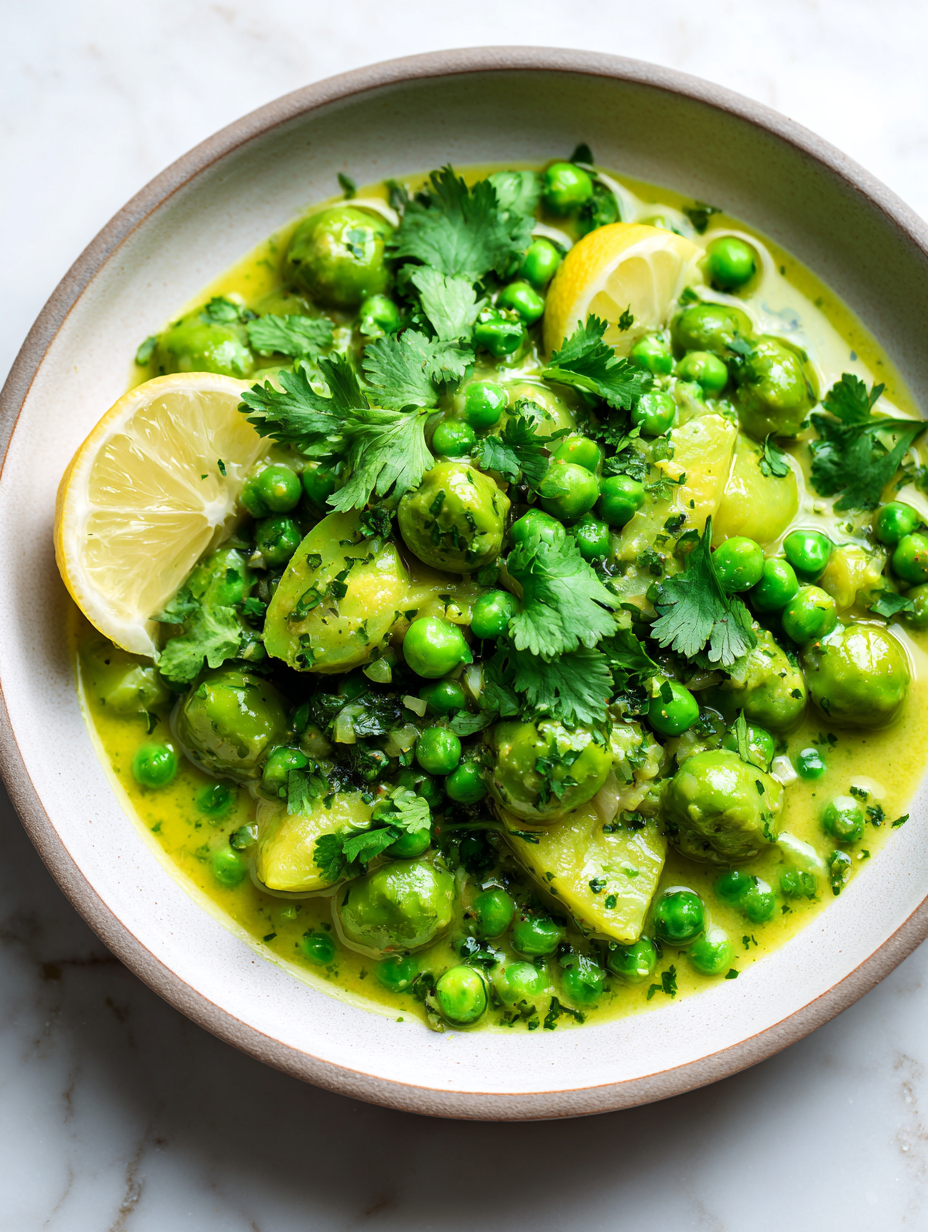
Green Pea Curry
Ingredients
Equipment
Method
- Heat the oil in a medium heavy-bottomed pan over medium heat until shimmering. Add the cumin seeds and let them crackle for about 30 seconds, releasing their fragrant aroma.
- Add the finely chopped onion and minced garlic to the pan. Sauté, stirring frequently, until the onion turns golden and fragrant, about 5-7 minutes.
- Stir in the turmeric, coriander, and chili powder. Toast the spices for about 1 minute until they become aromatic, coating the onions evenly.
- Pour in the coconut milk, stirring well to combine and scraping up any bits stuck to the bottom of the pan. Bring to a gentle simmer and let it cook for 3 minutes, allowing the flavors to meld.
- Add the frozen green peas directly into the pan. Stir to coat the peas with the sauce, then cover and cook for about 5-8 minutes, until peas are tender and vibrant green.
- Uncover and taste the curry. Adjust the salt and add a squeeze of lemon juice for brightness. If the sauce is too thick, stir in a little water and simmer uncovered for a couple of minutes to loosen it.
- Remove from heat and let the curry sit for 2 minutes. This resting period helps the flavors deepen and the sauce to slightly thicken.
- Squeeze a little more lemon juice over the curry if desired, then serve hot over steamed rice or with flatbread. Garnish with fresh herbs if you like.
Notes
Pro tips for perfect green pea curry
- Toast spices until fragrant to unlock their full aroma, filling your kitchen with warm, nutty notes.
- Use fresh green peas if possible; they cook quickly and retain that lively, sweet burst of flavor.
- Add coconut milk off the heat if splitting occurs; this preserves its creamy texture and delicate flavor.
- Stir frequently when sautéing onions and garlic to develop a sweet, caramelized base without burning.
- Adjust the curry’s thickness by adding water or simmering uncovered; aim for a glossy, slightly thickened sauce.
- Finish with a squeeze of lemon just before serving to brighten the curry and enhance the sweetness of the peas.
- Use a heavy-bottomed pan to prevent scorching and ensure even cooking of the delicate peas and spices.
Common mistakes and how to fix them
- FORGOT to check spice levels → Taste and adjust before serving.
- DUMPED too much water → Simmer longer to thicken the sauce naturally.
- OVER-TORCHED spices → Remove pan from heat immediately to prevent bitterness.
- MISSED resting time → Let curry sit 2 minutes for deeper flavor integration.
Quick fixes and pantry swaps
- When sauce is too thick, splash in water and simmer gently to loosen.
- If peas turn mushy, add fresh ones next time or cook frozen peas for less time.
- Splash cold water on over-torched spices to cool and prevent bitterness.
- Patch a bland curry with a squeeze of lemon or a pinch of salt to brighten flavors.
- Shield delicate peas by stirring gently and avoiding high heat during simmering.
Make-Ahead and Storage Tips
- Prep the curry base and chop ingredients a day in advance; the flavors develop better overnight, and the fridge smell is just sweet peas and spices.
- Store leftovers in an airtight container for up to 2 days in the fridge; the sauce thickens slightly, intensifying the spice aroma.
- Reheat gently on the stove over low heat, stirring often, until steaming and fragrant again—watch for overcooking the peas and losing their pop.
- For longer storage, freeze in single-serving portions up to 1 month; the texture may soften slightly, but the flavors stay rich and vibrant.
- Thaw in the fridge overnight, then reheat as above, adding a splash of water or coconut milk to loosen the curry if it thickens too much.
Top questions about green pea curry
1. Can I use fresh peas instead of frozen?
Frozen peas are easiest—just toss them straight into the curry; fresh ones need a quick boil first. The flavor is bright and sweet, almost like spring in every bite.
2. How do I prevent fresh peas from turning mushy?
Yes, but add them at the very end and cook only until tender—fresh peas can turn mushy if overcooked, losing their lively color and bite.
3. Can I substitute coconut milk?
Coconut milk adds creamy richness and a subtle sweetness that balances the spices. If you’re allergic or want a lighter version, plain yogurt stirred in off heat works well.
4. What’s a good dairy-free alternative?
Absolutely. Use Greek yogurt or a splash of plant-based cream. Just add it after removing the curry from heat to avoid splitting, and expect a tangier note.
5. Should I toast the spices?
Toasting spices first releases their aroma and deepens flavor. If you skip this, your curry will taste flatter and less fragrant, so try to toast at least cumin and coriander.
6. How long should I sauté the onions?
Yes, a quick sauté of onions and garlic until golden brings out sweetness and develops a flavorful base. Rushing this step will result in a bland, dull-tasting curry.
7. When should I add lemon juice?
Add lemon juice just before serving to brighten the dish. It enhances the natural sweetness of the peas and adds a fresh zing that lifts everything.
8. How do I fix a too-thick or too-thin curry?
If the curry becomes too thick, stir in a little water and simmer gently. If it’s too thin, simmer uncovered for a few minutes until it thickens and glistens.
9. Are frozen peas better than fresh for this dish?
Frozen peas are great because they retain that vibrant color and sweet flavor. Using fresh peas is fine, but they cook quickly and can lose firmness if overdone.
10. How do I know when the peas are cooked properly?
The key is gentle simmering and quick cooking. Overcooking the peas makes them mushy, so keep an eye on the time and test for a slight bite before removing from heat.
Cooking this green pea curry feels like reconnecting with a simple, honest pleasure—those bright, sweet peas simmered gently into a creamy, fragrant sauce. It’s a dish that reminds me to lean into the little things, even when life feels chaotic. And honestly, it’s the kind of comforting, fresh flavor I turn to when I need a quick, satisfying moment in the kitchen.
In a way, this recipe is about capturing that fleeting summer burst of peas and turning it into something warm and nourishing. It’s a reminder that some of the best dishes come from just a few good ingredients and a little patience. No fuss, just good food that feels right in the moment.

Hi, I’m Anjali Arora, the quietly curious mind behind Landscape Insight. I’ve always been most comfortable in my own space. I’m not great at small talk (it still makes me a little uneasy), and I’ve never been the loudest person in the room. What I have always carried with me, though, are two steady loves that shape how I move through the world: animals and food.