
Spring always sneaks up on me with its bursts of green—those tender stalks and bright leaves that seem to shout, ‘Eat me now!’ I love how this quiche lets those flavors shine without too much fuss, just a simple crust and a custard that’s barely there. It’s one of those dishes that feels like a gentle celebration of the season, not trying too hard, just honest and fresh.
There’s something about balancing the slightly roasted asparagus with the earthy spinach that feels like capturing a moment in the garden—quick, bright, and a little messy. I’ve made this recipe a dozen times, tweaking it each season, but the core idea remains the same: a straightforward way to enjoy early spring’s bounty, no complicated ingredients, just what’s in season and good. It’s my go-to when I want something nourishing that feels like a breath of fresh air.
This recipe focuses on highlighting the seasonal simplicity of asparagus and spinach, emphasizing their fresh, vibrant flavors through a minimal yet satisfying quiche that celebrates the early spring harvest.
The story behind this recipe
- This quiche came about one rainy Sunday when I rummaged through the fridge, hunting for something fresh but comforting. The idea of bright asparagus and tender spinach wrapped in a custard just felt right—like a little springtime hug on a plate.
- I remember the first time I made it for my sister, who’s not really into green veggies. Watching her take that first bite, her eyes lit up—surprised by how simple ingredients could turn into something so lively. It’s become my go-to when I want to celebrate early spring’s wild, raw beauty, without fuss or fancy tricks.
- It’s the kind of dish that feels like a small victory—an easy, honest way to get those greens in, especially when they’re so fleeting. Every time I make it, I think about how food connects us to the seasons, the garden, and those quiet moments of just appreciating what’s fresh.
Ingredient breakdown
- Asparagus: I love the snap and grassy aroma when I blanch it briefly. You can skip this step if you prefer a firmer bite, but the flavor really brightens after a quick dip in boiling water.
- Spinach: I find fresh spinach is best sautéed just until wilted—watch for that vibrant green, not dull. If you’re short on time, frozen works too; just squeeze out excess moisture first.
- Eggs: My go-to is large organic eggs; they give a rich, custardy texture. Use farm-fresh if you can, but a good quality store-bought brand still makes a silky filling.
- Cream: I prefer heavy cream for its velvety feel and subtle sweetness. If you want to lighten it up, swap in half-and-half, but expect a slightly less lush result.
- Cheese: I usually use Gruyère for its nutty, melting goodness, but fontina or even a mild cheddar can add their own cozy touch. Grate it fresh for the best melt and flavor.
- Pie crust: I lean towards a buttery homemade crust, flaky and tender. If you’re pressed, a good store-bought crust works—just blind bake it until golden to avoid sogginess.
- Seasonings: A pinch of nutmeg in the custard adds warmth, and fresh cracked black pepper brings a lively bite. Don’t shy away from a little salt—greens need it to really sing.
Spotlight on key ingredients
Asparagus:
- I love the snap and grassy aroma when I blanch it briefly. You can skip this step if you prefer a firmer bite, but the flavor really brightens after a quick dip in boiling water.
- Spinach: I find fresh spinach is best sautéed just until wilted—watch for that vibrant green, not dull. If you’re short on time, frozen works too; just squeeze out excess moisture first.
Spinach:
- Eggs: My go-to is large organic eggs; they give a rich, custardy texture. Use farm-fresh if you can, but a good quality store-bought brand still makes a silky filling.
- Cheese: I usually use Gruyère for its nutty, melting goodness, but fontina or even a mild cheddar can add their own cozy touch. Grate it fresh for the best melt and flavor.
Notes for ingredient swaps
- Dairy-Free: Swap heavy cream for coconut cream or cashew cream. Expect a slightly thinner custard with a subtle coconut aroma.
- Gluten-Free: Use a gluten-free pie crust or crushed gluten-free crackers pressed into the dish. The texture will be a bit denser but just as flavorful.
- Cheese Variations: Replace Gruyère with smoked mozzarella or feta. Each will bring a unique tang and meltiness to the filling.
- Vegan: Use silken tofu blended with nutritional yeast and plant-based milk instead of eggs and cream. It’ll be softer but still rich and satisfying.
- Herb Boost: Add fresh herbs like tarragon or chives to brighten the filling. These make a noticeable difference in aroma and flavor.
- Asparagus: Use green beans or broccolini if asparagus isn’t in season. They won’t be quite the same, but still lovely and fresh.
- Spinach: Substitute with kale or Swiss chard. Just blanch and squeeze out excess moisture—these greens hold up well and add a hearty touch.
Equipment & Tools
- 9-inch tart pan or pie dish: Holds the crust and filling, shapes the quiche.
- Rolling pin: Rolls out the dough evenly.
- Mixing bowl: Prepares custard mixture.
- Whisk: Blends eggs and cream smoothly.
- Skillet: Sautés spinach and asparagus.
- Parchment paper and pie weights: Prevents crust from puffing during blind baking.
Step-by-step guide to asparagus and spinach quiche
- Preheat your oven to 180°C (350°F). Gather your equipment: a 9-inch tart pan or deep pie dish, a rolling pin, a mixing bowl, a whisk, and a skillet.
- Blind bake the crust: Roll out your pie dough on a floured surface to about 0.5 cm thick. Fit it into the pan, trim edges, and prick the bottom with a fork. Chill 10 minutes.
- Bake the crust blind: Line with parchment, fill with pie weights or dried beans. Bake for 15 minutes. Remove weights and parchment, bake another 5 minutes until lightly golden.
- While crust bakes, prepare the filling: Trim asparagus, cut into 2-inch pieces. Blanch in boiling water for 2 minutes until vibrant green. Transfer to ice water, drain well.
- Sauté spinach: Heat a drizzle of olive oil in a skillet over medium. Add spinach, cook until wilted, about 2-3 minutes. Squeeze out excess moisture and chop roughly.
- Make custard: In a mixing bowl, whisk together 4 large eggs, 1 cup heavy cream, a pinch of nutmeg, salt, and pepper. Set aside.
- Assemble the quiche: Spread sautéed spinach evenly over the crust. Arrange asparagus on top. Pour custard over the vegetables, sprinkle with grated cheese.
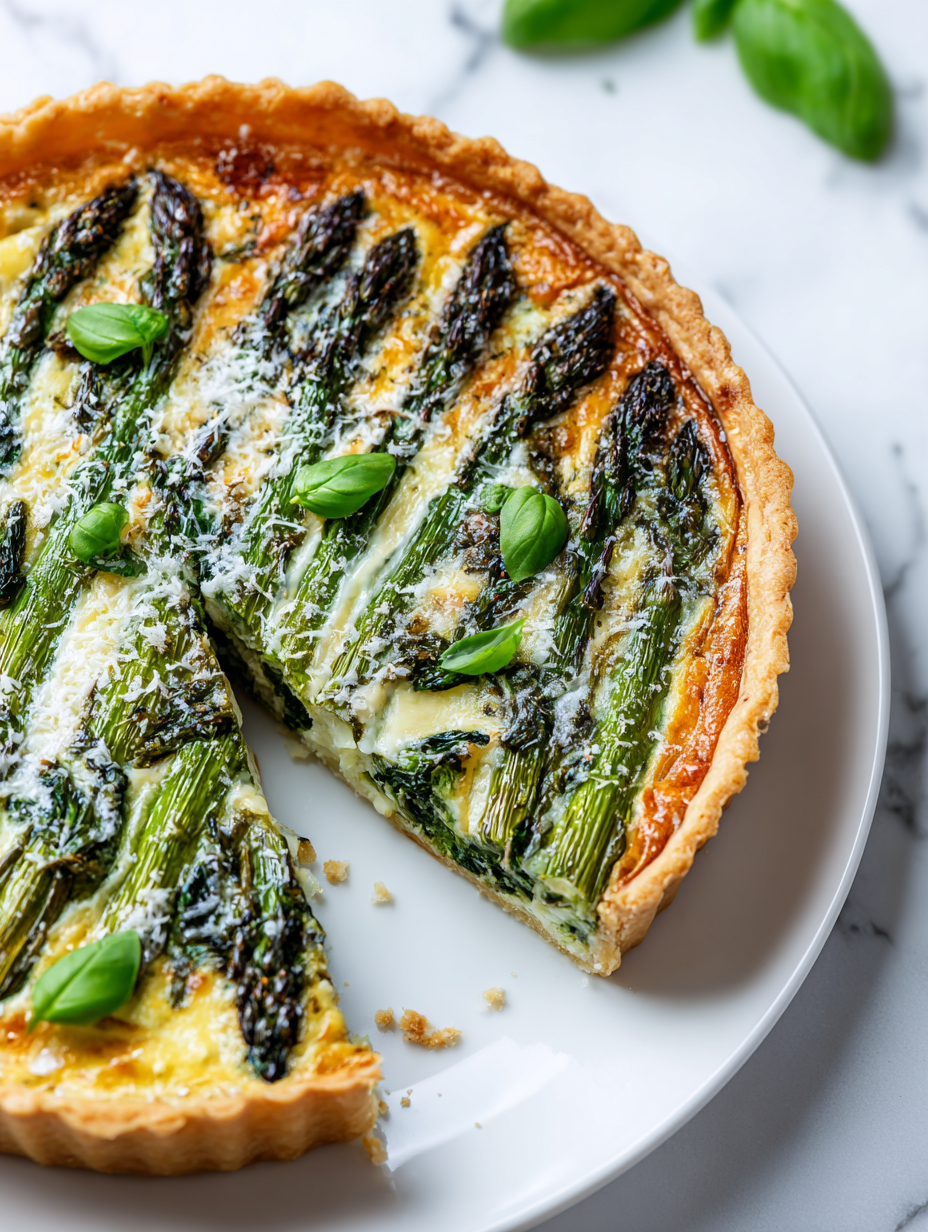
- Bake the quiche: Place in the oven, bake for 35-40 minutes at 180°C (350°F). The top should turn golden, and the filling should set with a slight jiggle in the center.
- Check for doneness: The custard is firm around the edges but slightly wobbly in the middle. The cheese is bubbly and browned. If not, bake 5 more minutes.
- Cool and rest: Let the quiche rest on a wire rack for 10 minutes. This helps it set further and makes slicing easier. Serve warm or at room temperature.
Allow the quiche to cool for 10 minutes on a wire rack before slicing. Serve warm or at room temperature, with a light salad if desired, to appreciate the bright, fresh flavors of the greens.
How to Know It’s Done
- Crust edges are golden and crisp after blind baking.
- Filling is set with a slight wobble in the center when gently shaken.
- Top is bubbly and lightly browned, with a fragrant, cheesy aroma.
Spring Asparagus and Spinach Quiche
Ingredients
Equipment
Method
- Preheat your oven to 180°C (350°F). Roll out the pie crust on a floured surface to about 0.5 cm thick, then fit it into your tart or pie dish. Prick the bottom with a fork, chill for 10 minutes, then line with parchment and fill with pie weights. Bake for 15 minutes, then remove the weights and parchment and bake for another 5 minutes until lightly golden.
- While the crust bakes, prepare the asparagus by trimming the woody ends and cutting into 2-inch pieces. Bring a pot of water to a boil, blanch the asparagus for 2 minutes until vibrant green, then transfer to an ice bath to stop the cooking and preserve color. Drain well and set aside.
- In a skillet, heat a small drizzle of olive oil over medium heat. Add the spinach and sauté until just wilted, about 2-3 minutes. Squeeze out excess moisture with a clean cloth or paper towels, then roughly chop the greens and set aside.
- In a mixing bowl, whisk together the eggs, heavy cream, ground nutmeg, and a pinch of salt and pepper until smooth and slightly frothy. This creates a silky custard base that will meld with the greens and cheese.
- Evenly spread the sautéed spinach over the partially baked crust. Arrange the blanched asparagus on top, then pour the custard mixture over the vegetables. Sprinkle the grated Gruyère cheese evenly across the surface.
- Place the assembled quiche in the oven and bake for 35 to 40 minutes, or until the top is bubbly and golden brown. The filling should be just set with a slight wobble in the center when gently shaken.
- Once baked, remove the quiche from the oven and allow it to rest on a wire rack for at least 10 minutes. This helps the custard set further and makes slicing easier without losing its structure.
- Slice the quiche with a sharp knife, revealing the vibrant green vegetables and melted cheese. Serve warm or at room temperature with a light salad for a perfect spring meal.
Pro tips for perfect quiche
- Use a sharp knife for asparagus to keep them whole and prevent bruising, which keeps the presentation tidy.
- Briefly blanch asparagus and plunge into ice water to lock in the bright green color and crisp-tender texture.
- Sauté spinach just until wilted; overcooking dulls the vibrant color and can lead to excess moisture in the filling.
- Whisk eggs and cream thoroughly to create a smooth, uniform custard that coats the greens evenly.
- Blind bake the crust until lightly golden to prevent sogginess once the filling is added and baked.
- Sprinkle cheese evenly before baking for a melt-in-your-mouth top with a golden, bubbly crust.
- Rest the quiche for at least 10 minutes after baking; this helps the custard set and makes slicing cleaner.
Common mistakes and how to fix them
- FORGOT to check oven temperature → Always verify oven calibration before baking.
- DUMPED filling too early → Ensure custard is just set and slightly wobbly in the center.
- OVER-TORCHED edges → Cover edges with foil if they brown too quickly during baking.
- MISSED resting time → Rest the quiche at least 10 minutes before slicing to avoid sogginess.
Quick fixes and pantry swaps
- When asparagus is limp, splash with lemon juice to brighten and revive texture.
- If filling cracks, patch with a dollop of extra custard and bake a few more minutes.
- Over-torched edges? Shield with foil for the last 10 minutes of baking.
- Forgot to blind bake? Duct tape the crust edges and bake at a lower temp to save it.
- heading:
Prep, store, and reheat tips
- Pre-chop and blanch the asparagus and spinach a day ahead; keep them in airtight containers in the fridge for up to 24 hours. Their vibrant color and fresh aroma stay intact.
- Prepare the custard mixture the night before; store covered in the fridge. Just give it a quick whisk before pouring into the crust.
- Blind bake the crust a day in advance; cool completely, then wrap tightly and store at room temperature or in the fridge for up to 2 days. Reheat briefly if needed to regain crispness.
- Reheat slices in a 150°C (300°F) oven for about 10 minutes until warm and the cheese bubbles. The flavor deepens slightly as it rests, so don’t over-reheat.
- This quiche keeps well for up to 2 days in the fridge. The greens may soften slightly, but the flavors deepen and meld after sitting—perfect for leftovers.
Common Questions about Asparagus and Spinach Quiche
1. How do I choose the best asparagus?
Look for firm, bright green asparagus with tightly closed tips. Freshness makes a big difference in flavor and texture.
2. How can I tell if spinach is fresh?
Fresh spinach should be vibrant and crisp; wilted or yellow leaves mean it’s past its prime. Wash and dry thoroughly.
3. Can I substitute different eggs?
Use large eggs for a rich, custardy filling. Farm-fresh eggs give extra flavor, but good-quality store eggs work well too.
4. What’s a good substitute for heavy cream?
Heavy cream adds richness, but half-and-half can be used for a lighter version. Expect a slightly less velvety custard.
5. What cheese can I use instead of Gruyère?
Gruyère melts beautifully and adds nutty flavor, but fontina or mild cheddar are good alternatives that also melt well.
6. How do I prevent a soggy crust?
Blind baking prevents sogginess. Use parchment and pie weights, bake until lightly golden, then add filling and finish baking.
7. Should I cook the asparagus beforehand?
Blanch asparagus for 2 minutes in boiling water, then shock in ice water to keep color and crispness.
8. How long should I let it rest?
Rest the baked quiche for at least 10 minutes; it helps the custard set and makes slicing neater.
9. How do I reheat leftovers?
Reheat in a low oven (around 150°C/300°F) until warmed through, about 10 minutes. It deepens flavors and restores texture.
10. Can I prepare this in advance?
You can make the crust and filling ahead of time—store separately in the fridge and assemble just before baking.
This simple quiche feels like a quiet nod to spring, really. It’s honest, fresh, and easy to pull together even on busy mornings or lazy weekends. Every bite reminds me how good seasonal greens taste when they’re allowed to shine, unmasked and vibrant.
In the end, it’s about those little moments—slicing into a warm piece, the aroma of toasted cheese filling the kitchen, and that fleeting joy of enjoying something so straightforward yet satisfying. No matter the season, this dish keeps a bit of that early spring spirit alive, quietly nourishing.

Hi, I’m Anjali Arora, the quietly curious mind behind Landscape Insight. I’ve always been most comfortable in my own space. I’m not great at small talk (it still makes me a little uneasy), and I’ve never been the loudest person in the room. What I have always carried with me, though, are two steady loves that shape how I move through the world: animals and food.