This asparagus and pea pasta is a little tribute to spring’s quicksilver moments. I love how those bright green bursts of freshness can turn a simple dinner into something celebratory, even if it’s just a weeknight. There’s something about the way the asparagus’s tender snap and the sweet pop of peas come together in that quick toss—it’s honest, simple, and feels like a breath of fresh air in the kitchen.
I’ve made this dish a hundred times, often on a whim when I find myself with a handful of fresh peas and a bunch of tender asparagus. It’s the kind of meal that doesn’t ask for fuss, just good ingredients and a bit of timing. No matter how many times I cook it, I’m still surprised by how that tiny splash of lemon and a sprinkle of Parmesan lift the whole thing into something unexpectedly bright and satisfying.
This recipe is inspired by the fleeting spring moments when asparagus and peas are at their peak, but I add a twist—using a splash of lemon and a handful of toasted almonds to elevate the simple ingredients into a dish that feels celebratory yet unpretentious. It’s about capturing that brief window of freshness and turning it into something you want to revisit, even after the season fades.
The story behind this recipe
This dish came about during a particularly hectic spring, when I was trying to make the most of those brief, bright green moments of fresh asparagus and peas. I remember rummaging through my fridge, noticing how those simple ingredients could turn into something more than just a quick lunch. It’s a recipe born from lazy Sunday afternoons, when I wanted something light, fresh, but with a little something extra—like a squeeze of lemon and a toasted almond crunch—to remind me that simplicity can still be special.
Ingredient breakdown
- Asparagus: I prefer thin, tender spears for that delicate snap and sweetness, but thicker stalks work if you chop them small. Look for vibrant green with firm tips—those are the best. Skip woody ends, and give them a quick snap to see where they naturally break, then trim accordingly.
- Peas: Fresh peas bring a sweet, slightly grassy burst that frozen just can’t match. I like sugar snap peas for crunch and flavor, but green peas work fine if you blanch them briefly. The key is to add them at the right moment so they stay bright and tender, not mushy.
- Pasta: I always choose a good-quality spaghetti or linguine; it holds sauces better and adds a satisfying bite. Cook until just al dente—there’s a slight bite that makes the dish feel lively. Save some pasta water—it’s magic for loosening the sauce and intensifying the flavor.
- Lemon: I love using fresh lemon zest and juice for that zingy brightness, especially right before serving. It cuts through the richness and enhances the green freshness. Try to get a lemon that’s heavy and fragrant; that’s where the juice and zest will shine.
- Olive oil: Use a good extra virgin for that fruity, peppery note that coats each bite. Warm it gently in the pan at the start to bloom the flavor, but avoid overheating—look for a gentle shimmer, not smoke.
- Almonds: Toasted almonds add a nutty, slightly smoky crunch that makes the dish feel richer. I chop them coarsely and toast until golden—smell that toasted aroma—it’s a game-changer. Skip if you’re nut-allergic, but consider a crunchy breadcrumb topping instead.
- Parmesan: Freshly grated Parmesan is the final touch—salty, umami, with a slight granular texture. I add it off the heat to prevent clumping and to keep that cheesy aroma vibrant. Use a microplane; the finer, the better for melting into the sauce.
Spotlight on key ingredients
Asparagus:
- I prefer thin, tender spears for that delicate snap and sweetness, but thicker stalks work if you chop them small. Look for vibrant green with firm tips—those are the best. Skip woody ends, and give them a quick snap to see where they naturally break, then trim accordingly.
- Peas: Fresh peas bring a sweet, slightly grassy burst that frozen just can’t match. I like sugar snap peas for crunch and flavor, but green peas work fine if you blanch them briefly. The key is to add them at the right moment so they stay bright and tender, not mushy.
Peas:
- I love using fresh peas for that sweet, grassy flavor. They stay bright and pop with a slight crunch. Frozen peas are okay if you blanch them briefly—just don’t overcook. They add a subtle sweetness that balances the dish’s freshness.
- ingredient
Notes for ingredient swaps
- Dairy-Free: Swap Parmesan for nutritional yeast. It offers umami but lacks that granular melt and slightly different flavor profile.
- Vegan: Use a plant-based cheese or omit cheese altogether. Lemon and almonds still bring brightness and crunch.
- Gluten-Free: Replace traditional pasta with gluten-free options like chickpea or rice pasta. Keep in mind they may have a slightly different texture.
- Nut Allergies: Skip almonds and add some toasted sunflower seeds or crispy chickpeas for crunch. The dish still gains texture and flavor.
- Frozen Peas: Use thawed frozen peas if fresh aren’t available. They’re a quick substitute but can be a touch softer.
- Lemon: Use bottled lemon juice in a pinch, but fresh zest and juice brighten the dish more vividly. Use sparingly if so.
- Almonds: Substitute with toasted breadcrumbs or crispy fried shallots for a different kind of crunch and flavor.
Equipment & Tools
- Large pot: Boil pasta and blanch peas
- Deep skillet: Cook vegetables and toss pasta
- Slotted spoon: Drain vegetables and pasta
- Microplane: Zest lemon for bright flavor
- Sharp knife: Trim asparagus and chop almonds
- Toasted almond pan or oven: Prepare crunchy topping
Step-by-step guide to asparagus and pea pasta
- Equipment & Tools: Use a large, deep skillet for even heat and space to toss the pasta. Have a slotted spoon ready for draining the vegetables. Keep a microplane for zesting the lemon and a sharp knife for trimming asparagus.
- Boil water: Fill a large pot with 4 liters (about 1 gallon) of salted water. Bring to a rolling boil at 100°C (212°F). Add a generous pinch of salt, then drop in the pasta. Cook until just al dente, about 8 minutes. Test a strand—should have a slight bite but not be firm or mushy.
- Prepare vegetables: While pasta cooks, trim the woody ends from asparagus by snapping them—listen for that clean break. Slice asparagus into 2-3 cm (1-inch) pieces. Set aside. Shell peas if using fresh, or drain frozen peas, and blanch briefly in boiling water for 30 seconds, then shock in cold water.
- Toast almonds: In a dry skillet over medium heat, toast chopped almonds until golden and fragrant—about 3-4 minutes. Keep stirring to prevent burning. Remove and set aside. You want a deep aroma and a slight crunch.
- Sauté asparagus: In the same skillet, add 2 tbsp olive oil over medium heat (about 160°C/320°F). When shimmering, add asparagus pieces. Cook for 2-3 minutes until tender but still bright green and slightly crisp. The tips should turn a vibrant shade and smell fresh.
- Combine ingredients: Drain pasta, reserving 1 cup of pasta water. Add pasta and peas to the skillet with asparagus. Toss gently over medium heat, about 1 minute, to combine flavors. If the mixture looks dry, add a splash of reserved pasta water—stir until glossy.
- Finish with lemon and cheese: Zest half a lemon directly over the pasta. Squeeze in the juice of half the lemon, then toss again. Off heat, sprinkle generously with grated Parmesan and toasted almonds. Stir to coat everything evenly.
- Plate and serve: Transfer to warm plates. Garnish with extra lemon zest and a drizzle of olive oil if desired. Serve immediately to enjoy the bright, fresh flavors and contrasting textures.
Serve immediately for the best flavor. No resting needed—just plate, garnish with lemon zest and more Parmesan if desired. Drizzle with a little olive oil to finish, then enjoy the crisp, bright contrast of textures and flavors.
How to Know It’s Done
- Pasta should be tender yet firm, not mushy.
- Asparagus tips bright green and slightly crisp, with a fresh aroma.
- Sauce should be glossy, coats the pasta evenly, with a fragrant lemon scent.
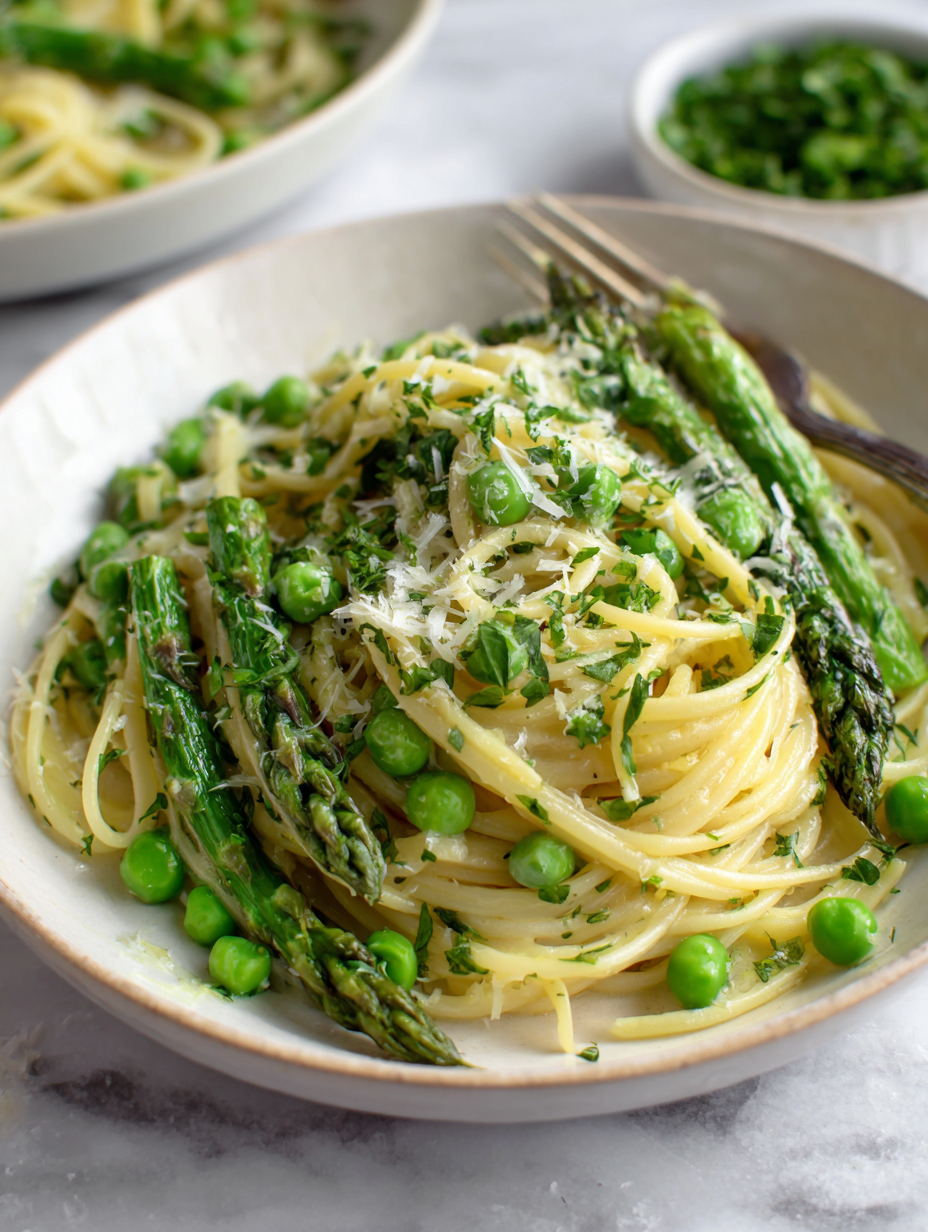
Spring Asparagus and Pea Pasta
Ingredients
Equipment
Method
- Bring a large pot of salted water to a rolling boil, then add the pasta and cook until just al dente—about 8 minutes. Drain, reserving a cup of pasta water, and set aside.
- While the pasta cooks, snap off the woody ends of the asparagus and slice the tender spears into 2-3 cm pieces. Shell the peas if using fresh, or thaw frozen peas and blanch them in boiling water for 30 seconds, then shock in cold water to preserve color and crunch.
- Toast the chopped almonds in a dry skillet over medium heat until golden and fragrant, about 3-4 minutes. Stir constantly to prevent burning. Transfer to a bowl and set aside.
- In the same skillet, heat 2 tablespoons of olive oil over medium heat. Add the sliced asparagus and cook for 2-3 minutes until tender but still bright green and slightly crisp. The asparagus should emit a fresh aroma and develop a slight char.
- Add the drained pasta and blanched peas to the skillet with asparagus. Toss gently over medium heat for about 1 minute, adding a splash of reserved pasta water if the mixture appears dry, until glossy and well coated.
- Use a microplane to zest half of the lemon directly over the pasta, then squeeze in the juice of half the lemon. Toss again to distribute the bright citrus flavor evenly.
- Off the heat, sprinkle the grated Parmesan cheese and toasted almonds over the pasta. Toss gently to combine, ensuring the cheese melts slightly into the sauce and the almonds stay crunchy.
- Transfer the pasta to warm plates, garnish with extra lemon zest if desired, and drizzle with a little olive oil for shine. Finish with freshly ground black pepper and serve immediately.
Notes
Pro tips for asparagus and pea pasta
- Bolded mini-head: Use high heat when sautéing asparagus for a vibrant color and slight char, about 160°C (320°F).
- Bolded mini-head: Reserve pasta water before draining; it’s salty, starchy magic to loosen sauces and add richness.
- Bolded mini-head: Toast almonds until fragrant and golden—avoid burning by stirring constantly during 3-4 minutes.
- Bolded mini-head: Toss peas into boiling water for just 30 seconds—bright green and tender, not mushy.
- Bolded mini-head: Zest lemon directly over the dish for maximum brightness, then squeeze fresh juice for a tangy pop.
Common mistakes and how to fix them
- FORGOT to check pasta doneness → Test for slight bite, not mush.
- DUMPED all pasta water → Reserve some to loosen sauce if needed.
- OVER-TORCHED almonds → Toast until fragrant and golden, not burnt.
- MISSED trimming woody ends → Snap and trim asparagus for tender bites.
Quick fixes for asparagus and pea pasta
- When sauce looks too thick, splash in hot pasta water to loosen and shimmer.
- If almonds burn, immediately remove from heat and toast a fresh batch, then add at the end.
- Splash lemon juice too early? Add a bit more zest or a pinch of salt to brighten again.
- Dumped all pasta water? Save a cup before draining; it’s your secret weapon for sauce.
- Overcooked peas turn mushy—shut off heat sooner and shock in cold water to keep color and crunch.
Prep, store, and reheat tips
- Prep the vegetables: Trim and chop asparagus, shell peas, and toast almonds up to a day in advance. Store separately in airtight containers in the fridge; keep the almonds in a cool, dry spot if not toasted fresh.
- Cook the pasta ahead: Boil and drain the pasta al dente, then toss with a little oil to prevent sticking. Store in an airtight container in the fridge for up to 24 hours. Reheat briefly in boiling water or microwave, then toss with a splash of hot pasta water to restore gloss.
- Assemble flavor components early: Zest and juice the lemon, grate Parmesan, and keep these ready in small bowls. Toast almonds just before serving for maximum crunch and aroma.
- Refrigerator shelf life: Keep prepared ingredients for no more than 24 hours to maintain brightness. Expect subtle flavor loss and slightly softer textures upon reheating.
- Reheating tips: Warm the pasta mixture gently in a skillet, adding a splash of reserved pasta water or a drizzle of olive oil. The lemon brightness may mellow slightly, but a quick squeeze of fresh lemon right before serving revives it.
Top questions about asparagus and pea pasta
1. Should I use fresh or frozen peas?
Fresh peas add a sweet, grassy flavor and a slight crunch that frozen peas can’t quite match. For the best texture, blanch them briefly before adding to the pasta.
2. Can I make this gluten-free?
You can substitute gluten-free pasta like chickpea or rice noodles, but they may have a different texture and slightly different flavor.
3. Can I make this vegan or dairy-free?
Yes, skip the cheese and use a drizzle of olive oil and lemon zest instead. It will still be bright but less creamy.
4. What kind of asparagus should I choose?
Use thin, tender asparagus for a delicate snap and sweetness. Look for vibrant green stalks with firm tips for best results.
5. How do I toast almonds properly?
Toast the almonds until golden and fragrant, about 3-4 minutes. Keep stirring to prevent burning and watch for a deep aroma and crunch.
6. How do I know when the pasta is done?
Cook the pasta in salted boiling water until just al dente, about 8 minutes. It should have a slight bite, not mushy.
7. Why reserve pasta water?
Reserve some pasta water before draining. It’s starchy and salty, perfect for loosening the sauce if it gets too thick.
8. How hot should the pan be?
When sautéing asparagus, cook over medium heat (about 160°C/320°F) until vibrant green and slightly crisp, around 2-3 minutes.
9. When should I add lemon?
Add lemon zest and juice right before serving for maximum brightness. If the sauce needs a lift, a quick squeeze of lemon enhances all flavors.
10. How do I reheat this dish?
Reheat leftovers gently in a skillet with a splash of reserved pasta water or olive oil. Serve immediately for the freshest flavor and texture.
This simple pasta captures spring’s fleeting green and sweet pops of peas. It’s honest, quick, and reminds me how fresh ingredients can turn a humble meal into something worth savoring.
Whenever I make it, I think about those bright mornings and the joy of tasting the season in every bite. It’s not fancy, but it’s real, and sometimes that’s all you need to feel a little more grounded.
Hi, I’m Anjali Arora, the quietly curious mind behind Landscape Insight. I’ve always been most comfortable in my own space. I’m not great at small talk (it still makes me a little uneasy), and I’ve never been the loudest person in the room. What I have always carried with me, though, are two steady loves that shape how I move through the world: animals and food.