

This asparagus potato soup is my go-to when I want something that feels like a quiet celebration of spring. It’s about highlighting those tender, bright green spears and balancing their freshness with the earthy warmth of potatoes. There’s a simplicity in it that lets the flavors breathe, no fuss, just real ingredients working together.
I first made this soup on a rainy weekend, trying to capture that fleeting moment when asparagus is at its peak but still affordable. The way the green turns silky and vibrant after blending, it’s like a little bowl of early-season hope. It’s honest, unpolished, but deeply satisfying in its quiet way.
Focusing on the overlooked harmony between fresh asparagus and hearty potatoes, this soup is about balancing subtle earthiness with a bright, springtime freshness that feels like a gentle awakening for the palate.
The story behind this recipe
- This soup harks back to a time I spent wandering through a farmers’ market in early spring. Watching those fresh green spears and plump potatoes together sparked an idea—why not blend their gentle earthiness into something soothing? It’s a dish born from that fleeting moment of seasonal abundance that I wanted to hold onto a little longer.
- I remember standing by the stove one rainy afternoon, watching the vegetables soften into a velvety mixture. There’s something honest about cooking with ingredients that feel like they’re just about to burst into full bloom—simple, almost primal, and deeply comforting.
- • The first time I made this, I was chasing the perfect balance—bright asparagus flavor without overshadowing the potatoes’ warmth.
• It became a regular in my kitchen when I needed a quick, nourishing meal that felt like a gentle hug.
• Every batch reminds me that good ingredients, cooked simply, often make the best memories.
Ingredient breakdown
- Asparagus: I love the snap and earthy aroma when freshly trimmed; if yours is a bit woody, peel the lower stalks to keep it tender and sweet.
- Potatoes: I prefer starchy varieties for creaminess, but Yukon Golds bring a buttery note—adjust based on your desired richness.
- Vegetable broth: I use homemade whenever I can; store-bought is fine but look for one with a deep, umami-rich flavor, almost meaty in its depth.
- Onion: I opt for yellow onion for sweetness, but shallots give a more delicate, slightly floral nuance—tweak depending on your mood.
- Garlic: I love the punch of roasted garlic, but raw adds a sharper bite—consider roasting it for a mellow, caramelized sweetness.
- Lemon juice: I add a squeeze at the end; it brightens everything, like a little zing of spring—don’t skip it if you want that fresh pop.
- Olive oil: I finish with a drizzle of good quality extra virgin; it adds a silky finish and a hint of peppery aroma that ties it all together.
Spotlight on key ingredients
Asparagus:
- I love the snap and earthy aroma when freshly trimmed; if yours is a bit woody, peel the lower stalks to keep it tender and sweet.
- Potatoes: I prefer starchy varieties for creaminess, but Yukon Golds bring a buttery note—adjust based on your desired richness.
Broth and lemon:
- Vegetable broth: I use homemade whenever I can; store-bought is fine but look for one with a deep, umami-rich flavor, almost meaty in its depth.
- Lemon juice: I add a squeeze at the end; it brightens everything, like a little zing of spring—don’t skip it if you want that fresh pop.
Notes for ingredient swaps
- Dairy-Free: Swap cream for coconut milk or cashew cream; adds richness but a slight coconut note or nuttiness.
- Vegetable Broth: Use mushroom broth for an umami boost or water with a splash of soy sauce for depth.
- Potatoes: Sweet potatoes work if you want a sweeter, denser soup; expect a more vibrant color and flavor.
- Onion: Leeks can replace onions for a milder, sweeter onion flavor with a subtle earthiness.
- Lemon Juice: Lime juice can brighten the soup with a slightly different citrus tang, especially good in summer.
- Oil: Avocado oil offers a buttery finish and higher smoke point, but olive oil keeps it classic.
- Herbs: Fresh thyme or parsley can replace basil for added earthiness or freshness; adjust amounts accordingly.
Equipment & Tools
- Large heavy-bottomed pot: Ensures even heat for gentle cooking and softening vegetables.
- Immersion blender or regular blender: Purees the soup to a silky consistency.
- Sharp knife: Chops vegetables precisely and safely.
- Cutting board: Provides a stable surface for chopping.
- Ladle: Serves the soup neatly into bowls.
Step-by-step guide to asparagus potato soup
- Gather your equipment: a large heavy-bottomed pot (for even heat distribution), a blender or immersion blender (for smoothness), and a sharp knife (for chopping).
- Trim the asparagus: snap off the woody ends, then chop the tender spears into 2-inch pieces. Set aside a few tips for garnish if desired.
- Peel and dice the potatoes: aim for uniform 1-inch cubes so they cook evenly. Rinse to remove excess starch.
- In the pot, heat 2 tbsp olive oil over medium heat (about 160°C/320°F). Add 1 chopped onion and 2 cloves minced garlic. Cook until translucent, about 5 minutes, and smell that sweet onion aroma.
- Add the potatoes and asparagus tips: sauté for 3-4 minutes, stirring occasionally. The vegetables should start to soften and turn vibrant green.
- Pour in 4 cups vegetable broth, bring to a gentle simmer. Cover partially, cook for 15-20 minutes until potatoes are fork-tender and asparagus is soft.
- Use an immersion blender directly in the pot or transfer to a blender in batches. Blend until smooth and silky, about 1-2 minutes. Be cautious with hot liquids.
- Return the soup to low heat, stir in juice of half a lemon, and season to taste with salt and pepper. Adjust thickness with a splash of water if needed.
- Ladle into bowls, garnish with reserved asparagus tips or a drizzle of olive oil. Rest for 2 minutes for flavors to meld before serving.
Let the soup sit for 2 minutes after blending to settle flavors. Finish with a squeeze of lemon and a drizzle of olive oil. Serve hot, ideally with a crusty slice of bread.
How to Know It’s Done
- Soup is velvety and smooth with no chunks remaining.
- Color should be a vibrant green, especially in the asparagus pieces.
- A faint aroma of garlic and onion should fill the kitchen, with a fresh lemon brightness on the palate.
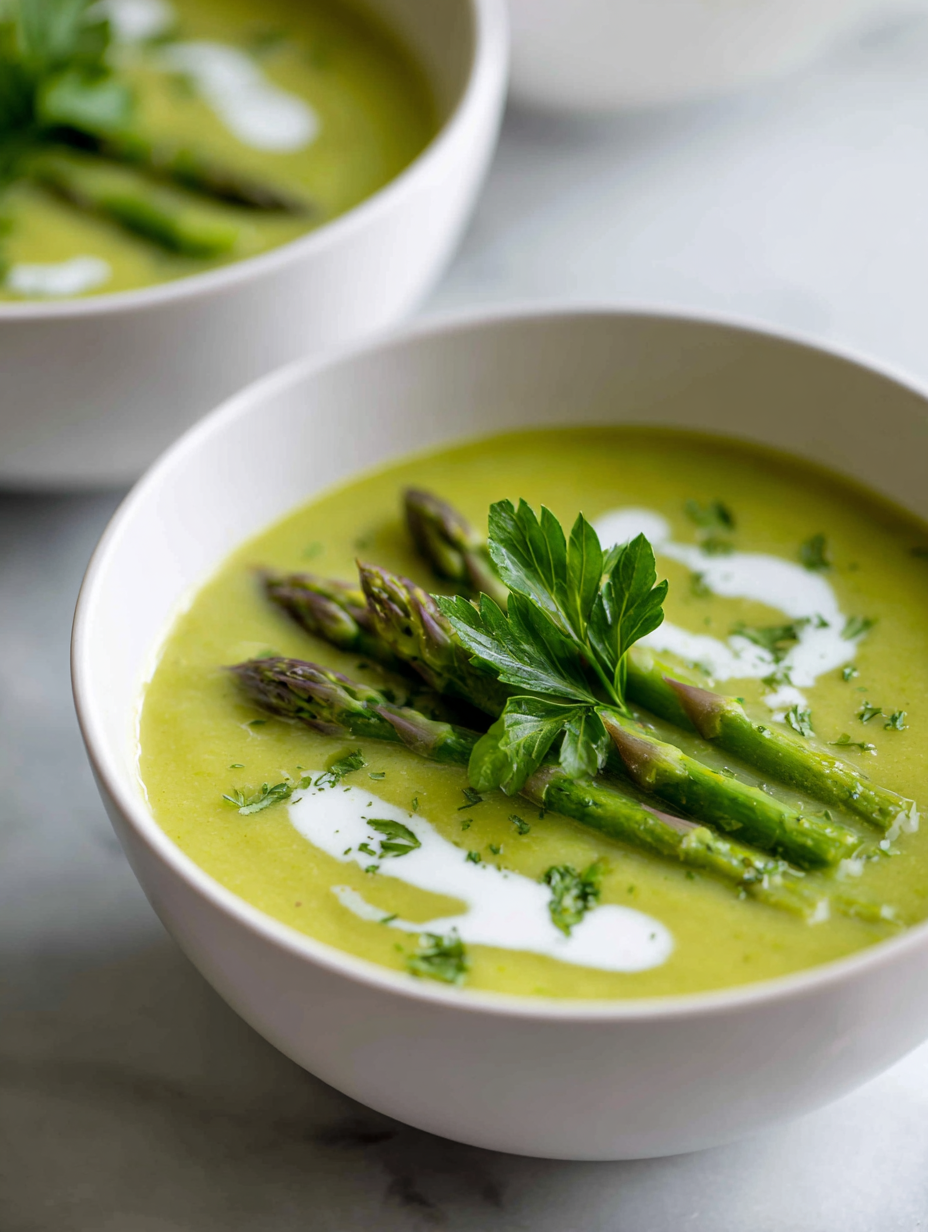
Asparagus Potato Soup
Ingredients
Equipment
Method
- Trim the asparagus: snap off the woody ends and peel the lower stalks if they feel tough, then chop into 2-inch pieces. Set aside a few tips for garnish if desired.
- Peel and dice the potatoes into uniform 1-inch cubes so they cook evenly. Rinse to remove excess starch, then set aside.
- Heat the large heavy-bottomed pot over medium heat and add the olive oil. Once shimmering, add the diced onion and cook until translucent and fragrant, about 5 minutes.
- Add the minced garlic to the pot and cook for another minute until it becomes fragrant, being careful not to burn it.
- Stir in the diced potatoes and asparagus tips, sautéing for 3-4 minutes until the vegetables start to soften and turn vibrant green.
- Pour in the vegetable broth, bringing the mixture to a gentle simmer. Cover the pot partially and cook for 15-20 minutes, or until the potatoes are fork-tender and the asparagus is soft.
- Use an immersion blender directly in the pot or transfer the soup in batches to a blender. Blend until the soup is smooth and velvety, about 1-2 minutes, being cautious with hot liquids.
- Return the blended soup to low heat, stir in the lemon juice, and season with salt and pepper to taste. If the soup feels too thick, add a splash of hot broth or water to thin it out slightly.
- Ladle the soup into bowls, garnishing with reserved asparagus tips or a drizzle of good olive oil for extra flavor. Let it sit for a couple of minutes for the flavors to meld.
- Enjoy your velvety, vibrant asparagus potato soup warm, complemented by crusty bread if desired.
Notes
Tips & Tricks for Perfect Soup
- Blanch asparagus tips: Quickly boil for 1 minute, then dunk in ice water to preserve bright color and crunch.
- Sauté gently: Keep heat medium to avoid browning; aim for a golden hue and fragrant aroma without caramelization.
- Blend in stages: Puree half first, then add remaining for a slightly textured finish—contrast in texture enhances the soup.
- Adjust thickness: Add a splash of hot broth if soup becomes too thick; it helps keep the soup silky without over-blending.
- Finish with acid: A squeeze of lemon brightens up the earthy flavors and adds a fresh, zesty pop right before serving.
- Use immersion blender: Direct blending in the pot reduces mess and minimizes oxidation, keeping the soup vibrant and fresh.
- Season gradually: Taste as you go—salt and pepper should amplify the natural sweetness and earthiness, not overpower.
Common mistakes and how to fix them
- FORGOT to check asparagus tenderness → test with a fork, should be just tender.
- DUMPED too much liquid → simmer uncovered to reduce and deepen flavors.
- OVER-TORCHED the garlic → lower heat once garlic is fragrant, avoid burnt bitterness.
- LEFT out lemon juice → add at the end for brightness, enhances overall flavor.
Quick fixes and pantry swaps
- If asparagus is woody, peel the lower stalks before cooking for a tender bite.
- When soup is too thick, splash in hot broth and stir until smooth and velvety.
- Splash lemon juice at the end to brighten flavors if the soup feels dull or flat.
- Patch over-torched garlic by adding a bit more oil and lowering the heat quickly.
- Shield leftover soup with plastic wrap, pressing directly onto surface to prevent oxidation.
Prep, store, and reheat tips
- Prep the vegetables: Trim asparagus and dice potatoes a day ahead; store in airtight container in the fridge for up to 24 hours, keeping them crisp and fresh.
- Cook the soup partially: Simmer the base without blending, then cool and refrigerate for up to 2 days. Reheat gently, stirring occasionally, until steaming and fragrant.
- Store leftovers: Keep the blended soup in an airtight container for up to 3 days; the flavors deepen slightly, with a richer, more unified taste.
- Reheat with care: Gently warm on low heat, stirring often, until hot and steaming—check for a smooth, velvety texture and a vibrant aroma before serving.
Top questions about asparagus potato soup
1. How do I select fresh asparagus?
Look for firm, bright green asparagus with tightly closed tips. The smell should be fresh and grassy, not sour or musty.
2. Should I peel the asparagus?
Peel the lower stalks if they feel woody or tough. It keeps the soup smooth and avoids stringy bites.
3. Which potatoes are best for this soup?
Use starchy potatoes like Russets or Yukon Golds for creaminess. Yukon Golds add a buttery flavor that enhances the soup.
4. Can I use store-bought broth?
A good vegetable broth adds depth. Look for one with a rich, umami flavor—homemade is best, but store-bought works too.
5. When should I add lemon juice?
Adding lemon juice just before serving brightens the flavors. It creates a fresh, zingy contrast to the earthiness.
6. How do I finish the soup?
A splash of good olive oil or a dollop of cream finishes the soup with a silky texture and rich aroma.
7. Should I blend it completely smooth?
Avoid over-blending; keep some texture in the soup for contrast. Use an immersion blender for control.
8. How do I fix it if it’s too thick?
If the soup is too thick, thin it out with hot broth or water. It should pour easily and feel velvety on the tongue.
9. How do I reheat leftovers?
Reheat gently on low heat, stirring often. The flavors deepen, and the texture stays smooth and inviting.
10. Why is this recipe good for spring?
This soup is perfect for early spring when asparagus is at its peak, offering a light yet satisfying meal.
This soup feels like a gentle nod to spring, a meal that’s both simple and deeply satisfying. It’s a reminder that good ingredients, treated with care, can turn a humble bowl into something special. Plus, it’s quick enough to make on a busy weekday but special enough to serve to guests.
Whenever I make this, I’m struck by how a few honest, fresh ingredients can come together so effortlessly. It’s not flashy, but it’s honest—like a quiet little victory in the kitchen. Sometimes, that’s enough to make me smile long after the last spoonful.

Hi, I’m Anjali Arora, the quietly curious mind behind Landscape Insight. I’ve always been most comfortable in my own space. I’m not great at small talk (it still makes me a little uneasy), and I’ve never been the loudest person in the room. What I have always carried with me, though, are two steady loves that shape how I move through the world: animals and food.